By Nathalie Parès- Global Climate and Health Alliance
When the Global Climate and Health Alliance (GCHA) started working on the second edition of Cradle to Grave – The Health Toll of Fossil Fuels and the Imperative for a Just Transition – a landmark report that consolidates decades of public health evidence and amplifies the voices of communities and clinicians living with fossil fuel harm, we knew that we needed our communication around the report to be unique to effectively convey the vast and intricate health effects of fossil fuels – from extraction to combustion. But also, we needed to shine a light on the perverse public relations (PR) tactics that the fossil fuel industry has employed for the last century in pursuit of profit, while hiding the inconvenient truth about its destructive impacts on climate, the environment and people’s health.
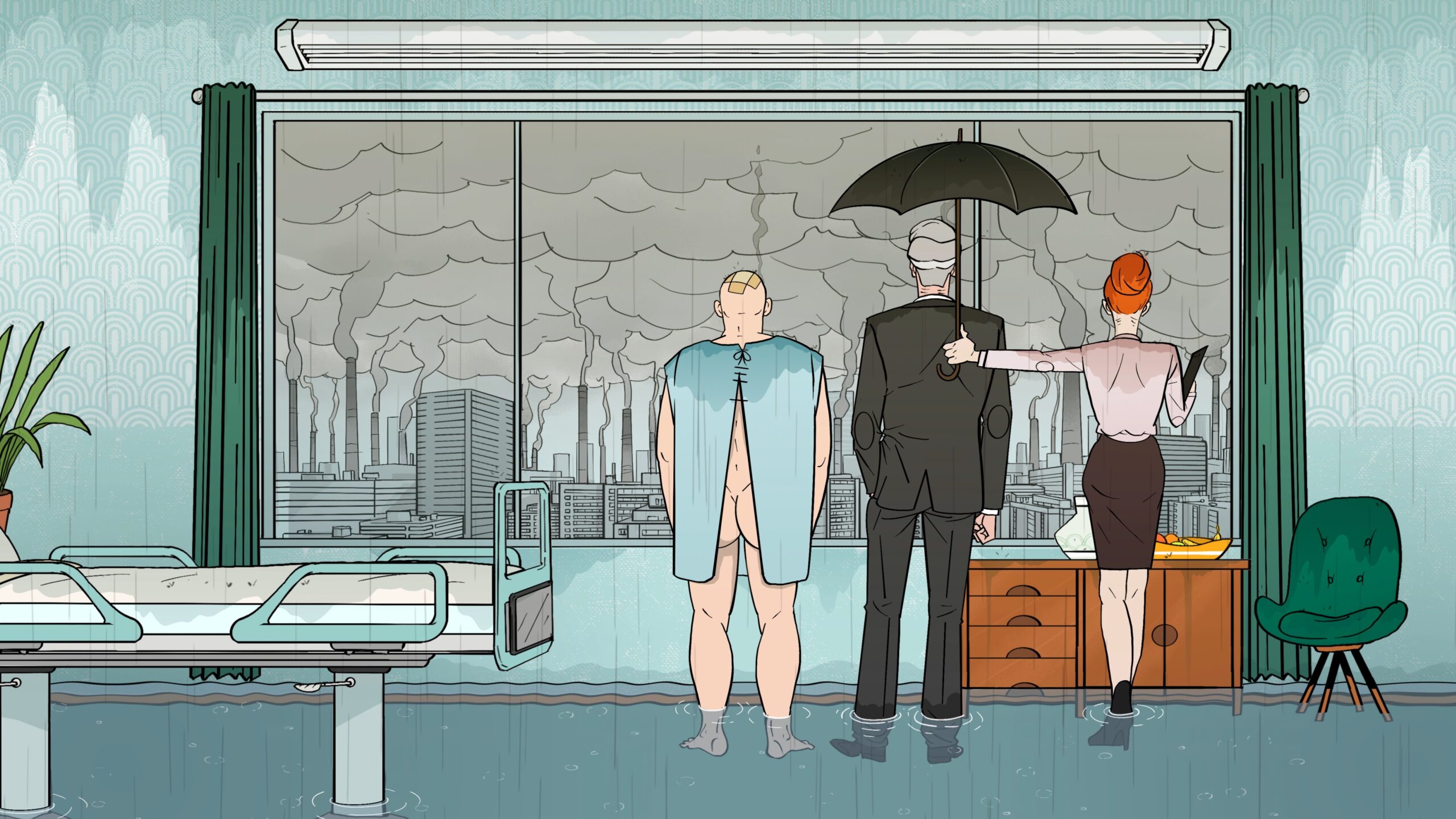
It was this last aspect that led to the creation of “The Well-Oiled Plan” – a short satirical film that exposes how the fossil fuel industry is using the same PR tricks once used by Big Tobacco, selling poison as “freedom”, and was released as a by-product of the Cradle to Grave report.
After decades of opportunistically surfing on the prevailing social and political atmospheres, the fossil fuel industry has not been short of ideas and tactics to keep its misdeeds under the radar. The PR and advertising industries have been the great enablers, portraying Big Oil as the “good guys”. That’s why when planning for “The Well-Oiled Plan” we decided that PR and advertising should have a central role.
Ideas and synergies
When we pitched our idea to Wit and Wisdom– an acclaimed animation studio with spotless ethical credentials – they immediately had a vision for the project. Coincidentally, they were already developing a comedy about climate change and the fossil fuel industry and reckoned that GCHA’s unique health approach to the climate crisis combined with the recent findings of our Cradle to Grave report would complement their existing project and form an epic “scene” of their full-length feature film, My Pet Footprint. We were in! and that’s how Tony, a PR tsar, became the lead character of “The Well-Oiled Plan”.
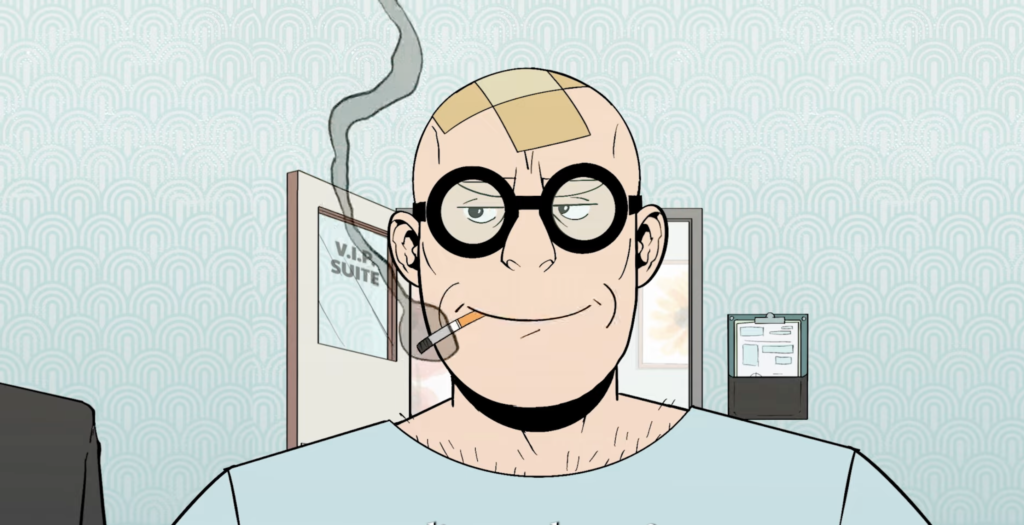
Tony is a man who has seen it all. He learned from the best in the tobacco industry and his cigarettes accompany him to all important gatherings. However, in a tense opening scene, while meeting with Klepp, the CEO of Grunt Oil, things are not going smoothly. His client has a big PR problem: journalists, NGOs and even some politicians are on his back, denouncing every aspect of Grunt Oil’s activities, and their impacts on the climate and people’s health across the world. Something shareholders might not like. The rest of the film is not for the faint hearted: Tony finds himself going through emergency brain surgery, and as soon as he is back in his VIP hospital room after a successful operation, he will have to give Klepp, who is there to “visit”, a full tour of the secret PR industry tactics that will allow Grunt Oil to keep drilling in peace… until death.
Finding the right voices
These characters needed voices, devilish ones. Wit and Wisdom had the perfect men for the job: Two award-winning British comedy creators who made Tony and Klepp sounds like no one you want to meet in a world where peace, science, respect, and well-being should prevail. Cody Dahler (Tony) and Michael Spicer (Klepp) with their generous pro-bono collaboration were key to the success of “The Well-Oiled Plan”. Not only did they skillfully combine the humor and cynicism required to make this film both serious and entertaining, but thanks to their vast social media following, the film reached well beyond GCHA’s usual audiences.
Navigating new creative processes
This was an unusual creative process for GCHA involving multiple partners from different industries which required patience, compromise, and open-mindedness but it also taught us the value and pay-off of exploring new communication methods and thinking outside of the box. The same way that Cradle to Grave is fast becoming a landmark report referred to in the works of the UN Special Rapporteur on Climate Change and the UN Special Rapporteur on the Right to a Clean, Healthy and Sustainable Environment, but that has also generated strong social media engagement, with leading journalists such as Amy Westervelt, Megan Rowling, and Ketan Joshi amplifying its findings. Amy Westervelt’s post alone reached over 50,000 impressions and 105 reposts within 24 hours.
Now, our hope is for “The Well-Oiled Plan” to become that special scene in the upcoming “My Pet Footprint”. And, if it all goes well it will be distributed by a major streaming platform, with further opportunity for our climate and health messaging to reach new audiences.
The power of culture
By working together, we can turn the fossil fuel narrative against itself. Hiring ethical PR and advertising experts (yes, they do exist! link to guidance) is a good start. Bringing art and artists onboard can also be a powerful tool. We must rely not only on science, ethics and traditional communication to spread our messages.
We should also reach out to new allies and audiences and provide them with inspiring stories. At last year’s COP30 in Belém, Brazil, culture was officially recognized as a driver of climate solutions and community resilience under the UNFCCC’s Action Agenda, highlighting its power to mobilize society and create the stage where change can take place.
Rebecca Solnit goes further, and in her latest book “No Straight Road Takes You There, she writes: “What drives our machines won’t change until we change what drives our ideas”. That’s why for 2026, we want to encourage our health community, to hire ethical PR agencies and consider art and artists as precious allies to share our important work and messages on climate and health.