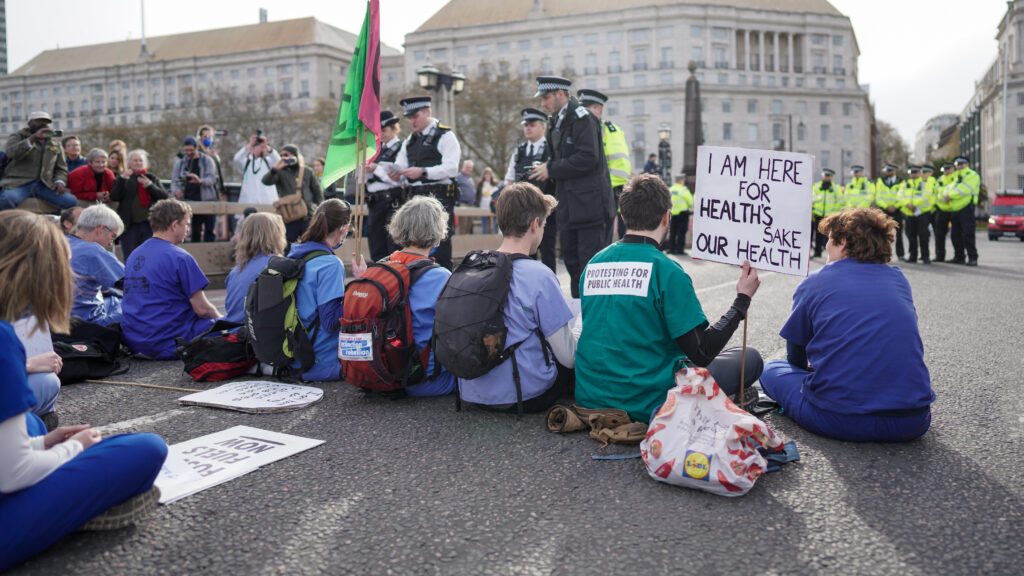
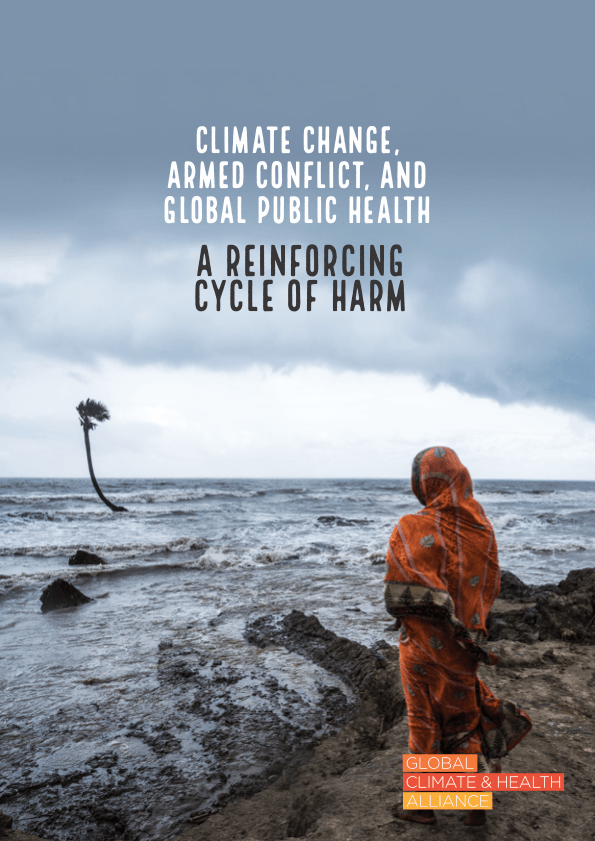
This report presents the current evidence on the intersecting nature of climate change and armed conflict, and its implications for global public health. 2026 has been a year of global turbulence. Climate change is intensifying, disproportionately affecting those who have contributed least to the crisis, and thereby increasing human inequality. Meanwhile, the global security landscape is characterised by record-high levels of armed conflict, posing a significant threat to global public health. Compounding this, military activity, which is largely excluded from international climate accountability mechanisms, is estimated to account for approximately 5.5% of global greenhouse gas emissions, a figure that rises sharply during active armed conflict.
Amid both crises, a rapidly changing digital landscape is reshaping how information and disinformation circulate. In conflict-affected settings, the deliberate spread of false information is distorting public perception, eroding trust, and undermining humanitarian response. At the same time, in the context of climate change, disinformation is rapidly evolving, exploiting public anxiety and confusion, therefore obstructing the collective action that an effective response demands.
Evidence reviewed in this report demonstrates that these crises do not occur in isolation. Rather, they converge in a polycrisis, a condition in which climate change and armed conflict interact and amplify one another, generating a significant threat to global public health. Populations in vulnerable settings face compounded vulnerabilities, with refugees, asylum seekers, and internally displaced persons, women and girls, children, older adults, remote and rural communities, and Indigenous communities bearing a disproportionate burden of this convergence.
This polycrisis is not a future scenario. It is the present reality for millions of people around the globe. How the world chooses to respond, and for whom, will define the health and humanity of the twenty-first century. With that in mind, GCHA is calling for integrated climate, health, and peacebuilding approaches, including sustainable investment in climate-resilient health systems, stronger multilateral cooperation, a just energy transition and universal clean energy access, adherence to international humanitarian law, ensuring the protection of healthcare personnel and infrastructure and critical infrastructure, and greater accountability for greenhouse gas emissions from military activities, to ensure a sustainable future for generations to come.