COP31: Climate and Health at the 2026 UN Climate Change Conference
Find out more about the 2026 UN Climate Change Conference and what it means for the climate and health movement.
Pexels (Yağmur Berberoğlu)
Find out more about the 2026 UN Climate Change Conference (COP 31) which will take place November 09-20 2026 in Antalya, Türkiye, and what it means for the climate and health movement.
Why does COP31 matter to the health community?
From devastating floods and wildfires, to widespread heat-related mortality, hunger, and disease outbreaks, throughout 2026 we have seen the health impacts of the climate crisis continue to intensify – with further escalation probable due to El Niño climate patterns.
Climate change is one of the greatest threats to human health of our time. Ambitious decision-making across all issues being negotiated at COP is vital to protecting health and well-being. COP 31 offers a critical chance to accelerate and elevate health-centred climate action- and work collaboratively to ensure that climate commitments are fully actioned and financed.
A dedicated thematic day on ‘Food, Agriculture and Health’ will take place on 9 November. ‘Dynamic and Resilient Health Systems’ is also included amongst the ten priority themes of COP 31– and the ‘Antalya Initiative for Health Resilience’ will launch during COP.
See here the full list of UNFCCC official events at COP31 which includes several health focused events.
What is COP31?
COP (Conference of the Parties) is the annual United Nations Climate Change Conference. This is the 31st Climate COP to take place- and is referred to as ‘COP31’.
During COP governments from around the world discussed and agreed on policies and actions to tackle the climate crisis. It was during COP 21 in 2015 that the pivotal ‘Paris Agreement’ (international treaty on climate change) was agreed upon.
Participants from all sectors of society including industry, government, civil society, academia, and health will join the conference to advocate and push for climate action.
Key COP31 discussion topics for health
Read the health community’s full recommendations for COP31 here.
The outcomes of every decision at COP31 impact health and wellbeing, including:
- Financing climate action: Significant shortfalls in the quantity and quality of climate finance are hampering low-and-middle-income countries from delivering health-protecting climate action across sectors.
- Developing a task force for adaptation indicators: To ensure that progress on adaptation can be tracked and inform future UNFCCC decisions.
- Setting out a clear roadmap for fossil-fuel transition: To identify a path towards fossil-fuel phase out – across countries and sectors- including an update on the COP30 Presidency Roadmap to Transition Away from Fossil Fuels.
- Ensuring just transition delivers health for communities: Health is central to just transitions and must be included in the scope of new entities being established for just transitions.
- Embedding health in the Paris Ambition Cycle: COP31 also marks the start of the second Global Stocktake (the UNFCCC process to monitor the implementation of the Paris Agreement, taking place every five years). It is a key moment to hold leaders accountable for ambitious climate action which protects and promotes human health.
- Beyond the negotiations – galvanizing efforts to make health systems more resilient: Outside of the negotiations themselves, COP31 will launch the ‘Antalya Initiative for Health Resilience’, on COP31’s Health Day on November 9th, highlighting the importance of preparing health systems to be resilient in the context of the climate era.
What terms might I see used at COP?
- Climate adaptation: Action to prepare for and adjust to the impacts of the climate crisis (e.g. building sea walls to protect against rising sea levels and ensuring health facilities have sources of power during storms and heat waves)
- Climate mitigation: Efforts that limit the climate crisis such as reducing emissions of greenhouse gases (e.g. using renewable energy sources instead of fossil fuels)
- Just transition: Ensuring that no one is left behind or pushed behind in the transition to low-carbon and environmentally sustainable economies and societies (UN, 2023)
- Nationally Determined Contribution (NDC): A plan that each country must develop outlining the actions and commitments that it will take to achieve the goals set out in the Paris Agreement (international treaty on climate change). Countries must provide an updated NDC every five years.
Glossary of Acronyms
- COI: Conflict of Interest
- GGA: Global Goal on Adaptation
- GST:Global Stocktake
- L&D / LDF: Loss and Damage / Loss and Damage Fund
- NCQG: New Collective Quantified Goal on Climate Finance
- SBs: Subsidiary Bodies
Useful resources
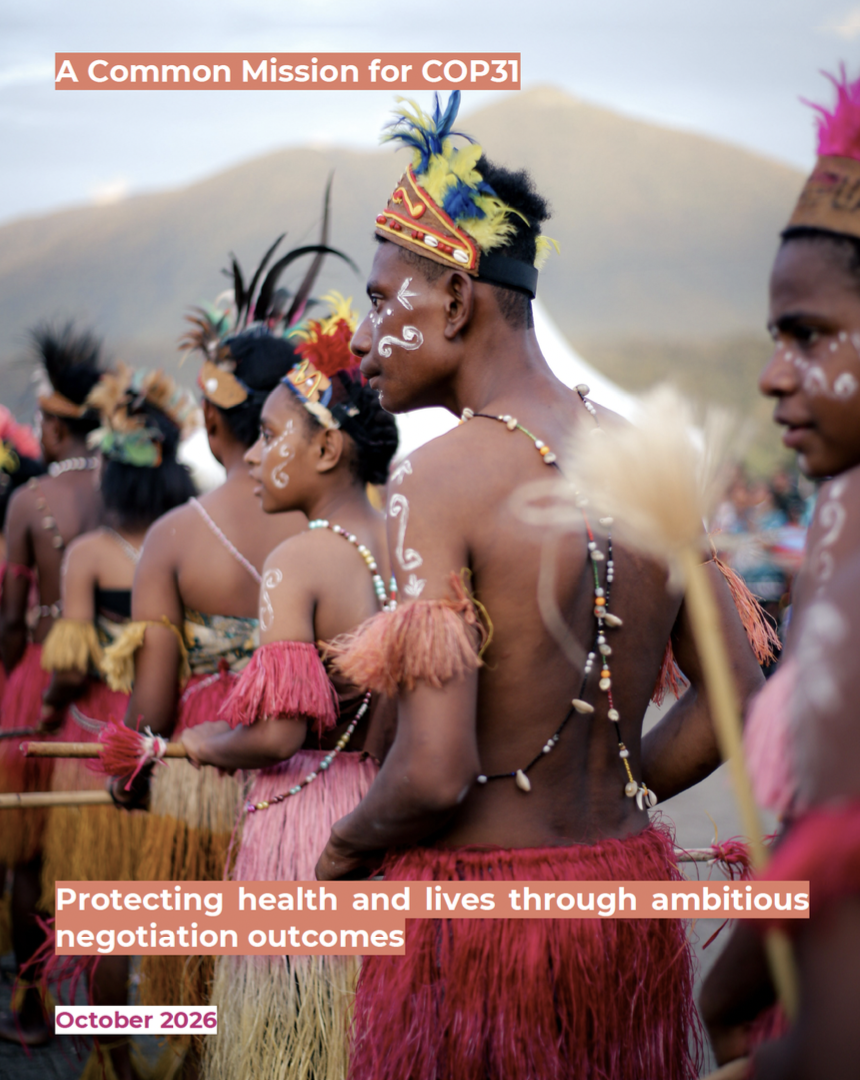
COP31 Health Community Recommendations
See the health community recommendations for COP 31 here.
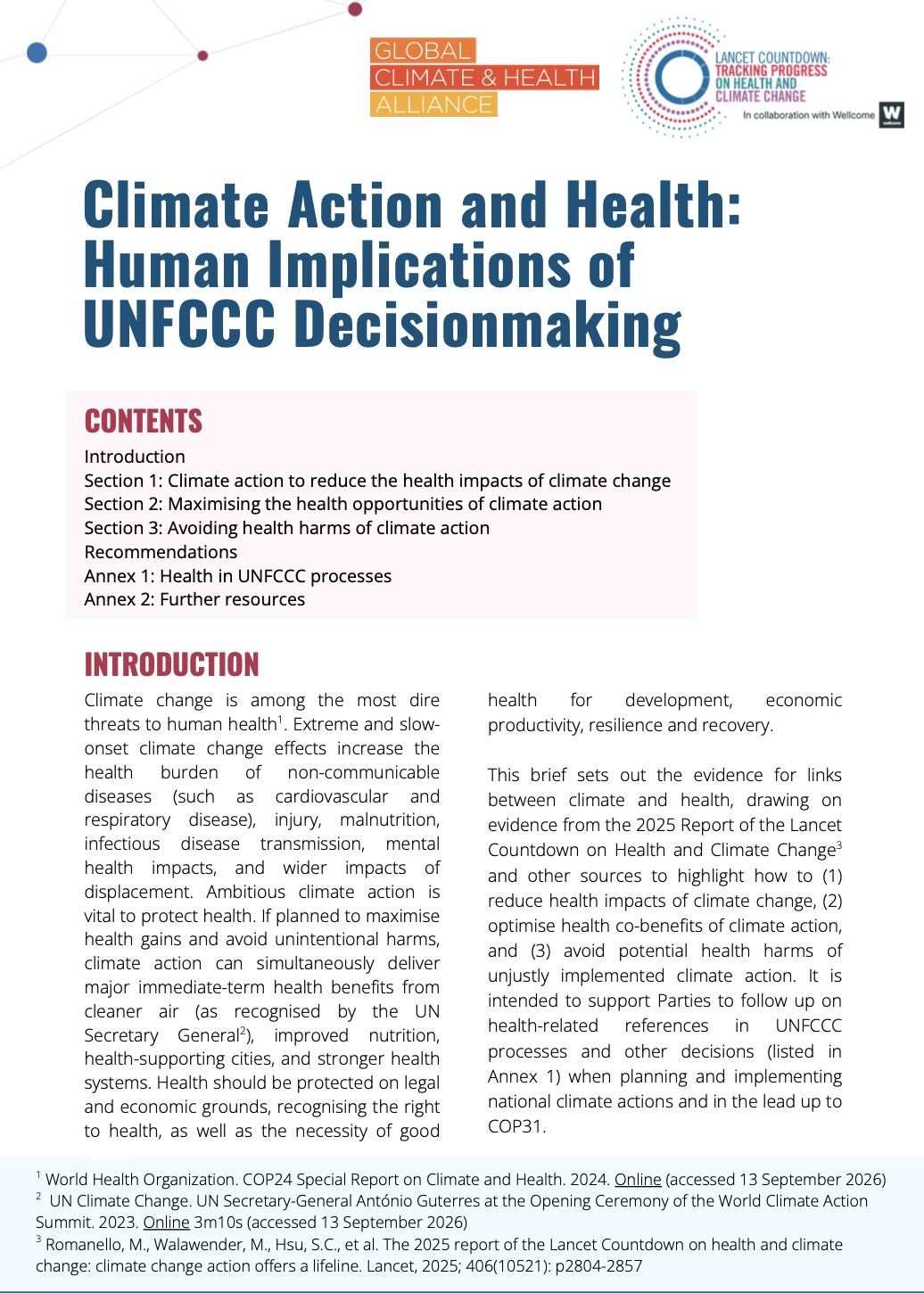
Climate Action and Health: Human Implications of UNFCCC Decisionmaking
This brief, co-produced with the Lancet Countdown, sets out the evidence for links between climate and health. It is intended to support Parties to follow up on health-related references in UNFCCC processes and other decisions when planning and implementing national climate actions and in the lead up to COP31. See here.
Nationally Determined Contributions (NDCs) and Health
GCHA produces scorecards for policymakers to assess the extent to which governments’ NDCs recognise and respond to the abundant linkages with health and air quality. See here.