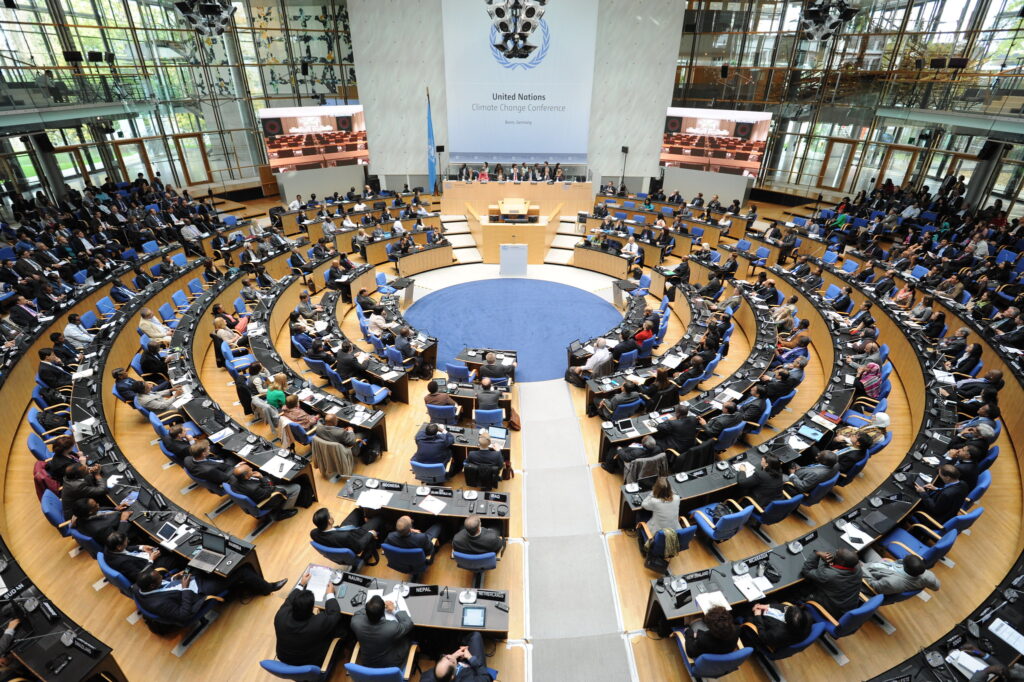
Bonn, 8 June 2026:- As the annual UNFCCC Bonn climate meeting (SB 64, June 8-18) opens in Germany, the Global Climate and Health Alliance called on governments to triple public, grant-based adaptation finance, to ensure the creation of national energy transition roadmaps, to deliver on pledges to address loss and damage, and to define a process and scope for a loss and damage report.
“Over the next fortnight in Bonn, governments must identify clear routes to triple public, grant-based adaptation finance to at least USD 120 billion by 2035 , said Jess Beagley, Policy Lead at the Global Climate and Health Alliance. “Without adaptation finance, life saving action to build resilience in the health sector and in health determining sectors, such as water and sanitation, disaster planning, and food systems, will be impossible – risking malnutrition, waterborne disease, exposure to extreme weather, and lack of access to health services at the very moments they are most needed.”
“During SB 64, rich countries in particular must clearly state their plans to develop national energy transition roadmaps for transitioning away from fossil fuels, to reduce emissions, strengthen energy security and build resilience”, added Beagley. “Governments must also lay the ground to ensure that the need for a just transition away from fossil fuels is reiterated in the second global stocktake.”
“Fossil fuels also need to be addressed in the UNFCCC’s just transition work programme”, said Nova Tebbe, Post Doctoral Researcher at the Global Climate and Health Alliance. “The IEA has made it clear that no new fossil fuel exploration is compatible with a 1.5C world – gas expansion in the name of clean cooking is not healthy for people, or the planet – access to reliable, safe, affordable forms of clean energy must be prioritised, for clean cooking, for electricity in hospitals and clinics, and in all places that currently lack reliable energy access. In its just transition negotiations, COP30 agreed to create a mechanism to enable equitable and inclusive just transition. This mechanism must include adequate resources and be based on just transition principles such as the right to health.”
“The national delegations present in Bonn must define a process and scope for the loss and damage gap report that addresses both economic and non-ecomonic loss and damage, with a focus on the needs of vulnerable communities”, said Michele Baker, Policy Coordinator at the Global Climate and Health Alliance. “Climate change is costing health and lives, but these impacts and other losses and damages remain broadly untracked at global level.”
“We need to see more accountability for pledges to the Fund for Responding to Loss and Damage – to date, only a portion of the pledges has been converted to signed agreements or disbursed”, added Baker. “Even if all current pledges are delivered, it would be insufficient to respond to the current needs – billions are needed while just over USD $800 million has been pledged.”
SB64 Press Conference: No Health Without Adaptation Finance
- Nairobi 4, Main Building – Entrance Level
- June 16th, 2026, 1200-1230
- Event will be livestreamed here
- Contact [email protected] for information
Speakers:
- Representatives from the health community, civil society, climate movement and least developed countries.
About the press conference:
Adaptation finance falls dangerously short of the levels needed – UNEP projects that by 2035, the level of adaptation finance required in developing countries will reach US$ 310-365 billion annually. Yet, adaptation finance fell from US$28 in 2022 to US$26 in 2023 (UNEP, 2025). At COP30, Parties committed to triple adaptation finance by 2035.
Adaptation finance across sectors is a lifeline – without it, populations will be left without access to nutritious food, potable water, safe homes, clean and reliable energy, or basic healthcare services. The quality of adaptation finance is also a vital issue, including delivery to communities and avoiding reinforcing cycles of debt, poverty and disease: the poorest countries in the world currently spend more on debt service than on healthcare, education and infrastructure combined (Bridgetown Initiative, 2024).
Well-designed adaptation interventions which protect health and lives offer high returns on investment. Health itself is also a pillar of adaptation, with healthy communities being the most resilient to climate shocks.
ENDS
Contact:
Dave Walsh, Communications Advisor, Global Climate and Health Alliance, [email protected], +34 691 826 764 (Available from 0630 CET)
About GCHA
The Global Climate and Health Alliance is a consortium of more than 250 health professional and health civil society organisations and networks from around the world addressing climate change. We are united by a shared vision of an equitable, sustainable future, in which the health impacts of climate change are minimised, and the health co-benefits of climate change mitigation are maximised.
Find out more: https://climateandhealthalliance.org/who-we-are/about/