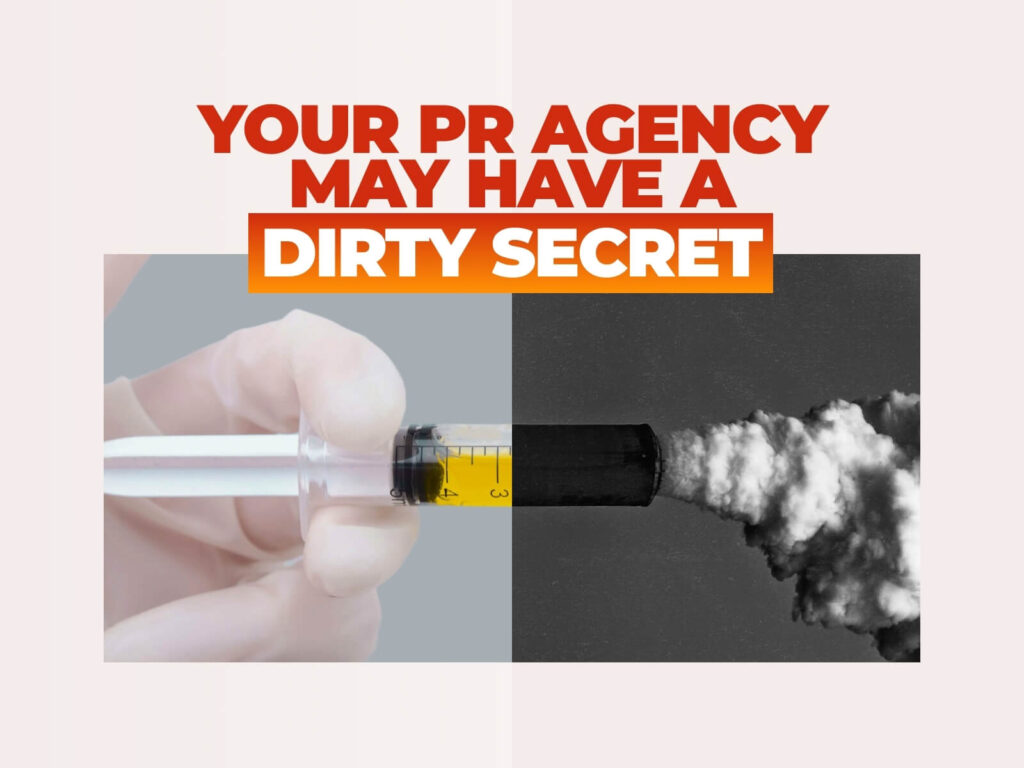
New “Fossil PR Toolkit” reveals how agencies trusted to promote health and wellbeing also work for fossil fuel companies that drive pollution, climate change, and health harms.
9 Sept 2026 – A new online toolkit exposes how communications agencies hired by the health sector to promote health, wellbeing and sustainability are also aiding fossil fuel companies to green their public profile, thus maintaining public support for continued coal, oil and gas production.
The “Fossil Public Relations Toolkit”, launched today by the Global Climate and Health Alliance (GCHA) and Clean Creatives, features PR companies such as Edelman, Publicis, Hawker Britton and VML that work with the health sector to promote human health, while also serving fossil fuel companies like Shell, ConocoPhillips and Saudi Aramco, in order to demonstrate the relationships and between health organisations, communications agencies and fossil fuel clients.
The Fossil Public Relations Toolkit shows how communications and PR agencies are paid to build public trust and communicate about disease prevention, sustainability, and wellbeing, while simultaneously providing communications services to businesses that contribute to air pollution, climate change, and serious health harms through the extraction, sale and use of fossil fuels.
Released a week after a UNEP report finds that global temperatures are set to rise above 1.5°C, with devastating impacts on people’s health, the toolkit also contrasts the USD$44 billion spent by healthcare businesses on PR & advertising in 2024, to the estimated USD$7 billion spent by fossil fuel companies in the same year and provides several case studies that demonstrate how the health sector’s significant spending power is used. Health organizations outspend fossil fuel companies six-to-one, giving them the purchasing power to set the terms of the agency relationships they fund, and leverage to change agency behavior..
“Around the world, the health sector relies on communications agencies to build credibility, earn public trust and communicate evidence that can protect people’s lives,” said Shweta Narayan, Campaign Lead at the Global Climate and Health Alliance. “But when the same agencies also help fossil fuel companies protect their reputation, greenwash their activities or sustain public acceptance of an industry whose products are damaging health, this suggests a serious conflict of interest. Health organisations must know who their communications partners work for and ask whether those relationships are compatible with their mission.”
Fossil fuels are the principal driver of climate change and a major source of health-damaging air pollution. At the same time, the fossil fuel industry invests heavily in advertising, public relations, sponsorship and other communications strategies to shape public perceptions of its products and role in society.
“Health leaders have long understood that climate change is a public health emergency”, said Laura Ranzato, Executive Director of Clean Creatives. “Yet many pharmaceutical and healthcare companies are directing their communications budgets to fund agencies that simultaneously help fossil fuel companies harm their patients, disrupt their supply chains, and undermine their missions. Health organizations have both the obligation and the market power to change that. We are calling on them to use that purchasing power: choose agencies that do not work with fossil fuel clients.”
The toolkit asks health institutions to take three practical steps:
- Audit: Review whether advertising, public relations, communications and event partners also work for fossil fuel companies.
- Reject: Avoid appointing agencies that promote fossil fuel expansion, greenwashing or climate disinformation.
- Commit: Adopt a fossil-free communications policy and join the Break the Fossil Influence commitment.
The toolkit is the latest phase of the Break the Fossil Influence – Fossil-Free Health Communications campaign, launched by GCHA in May 2025. Since then, 119 health organisations have committed to no longer work with advertising and public relations agencies that also serve the fossil fuel industry. Signatories include major global health organisations and professional associations such as Médecins Sans Frontières, Amref Health Africa, The Lancet, the International Federation of Medical Students’ Associations, the World Federation of Public Health Associations, the World Organisation of Family Doctors and the Yale Centre on Climate Change and Health.
From commitment to accountability
The Fossil PR Toolkit builds on the Break the Fossil Influence campaign by giving health organisations a practical tool to examine their own communications relationships. The case studies highlight the contradictions that can arise when agencies work across both health and fossil fuel accounts and encourage health organisations to consider the reputational, ethical and public health implications of those relationships.
The campaign also encourages health organisations to incorporate fossil fuel client screening into procurement processes and requests for proposals, helping ensure that institutional spending and communications practices align with public health and climate commitments.
“For health organisations, this is not simply a question of communications ethics,” Narayan said. “It is an issue of public health integrity, conflict of interest and credibility. Organisations cannot credibly protect the people from the health harms generated by the climate crisis while directing communications budgets to agencies that help greenwash the industry responsible for those harms.”
“Just as health leaders once stood up to Big Tobacco and its advertising, the health sector must now stand up to Big Oil”, said Jeni Miller, Global Executive Director of the Global Climate and Health Alliance. “Health organisations must exercise their power not only through the positions they take publicly, but through the companies they choose to work with. Communications budgets should help protect health, and should not be used to support businesses that help polluters maintain their influence and green their profile while they continue to perpetuate harm.”
Health sector leadership is growing
When the Break the Fossil Influence campaign launched during the World Health Assembly in Geneva in May 2025, 30 organisations representing the interests of more than 12 million health professionals had made the Fossil-Free Health Communications commitment. That number has now grown to 119 health organisations, reflecting growing recognition that health leadership on fossil fuels must extend beyond public statements and operational sustainability to the organisations and industries that health institutions choose to support through their spending. The campaign draws on lessons from public health action on tobacco, where health organisations increasingly recognised that partnerships with companies and intermediaries supporting the tobacco industry were incompatible with their health mission.
The Fossil PR Toolkit will be shared with health systems, professional associations, pharmaceutical and medical technology companies, foundations, non-profit organisations, and sustainability leaders, as well as advertising, PR, and communications professionals, to encourage more health institutions to review their agency relationships.
ENDS
Contact:
Dave Walsh, Communications Advisor, Global Climate and Health Alliance, [email protected], +34 691 826 764 (Available from 0630 CET)
About GCHA: The Global Climate and Health Alliance is a consortium of more than 300 health professional and health civil society organisations and networks from around the world addressing climate change. We are united by a shared vision of an equitable, sustainable future, in which the health impacts of climate change are minimised, and the health co-benefits of climate change mitigation are maximised.
Find out more: https://climateandhealthalliance.org/who-we-are/about/
About Clean Creatives: Clean Creatives is an award-winning campaign group advocating for an industry-wide movement in advertising and PR, where agencies and creatives pledge to refuse future work with fossil fuel corporations. To date, more than 1,650 agencies and 4,600 creatives globally have signed the Clean Creatives pledge. The campaign is known for its data-led reports on fossil fuel contracts, including the F-List, and for pressuring B Lab to revoke Havas’ B Corp status after it won a Shell contract.
Clean Creatives Website: cleancreatives.org